02: ANALYZE
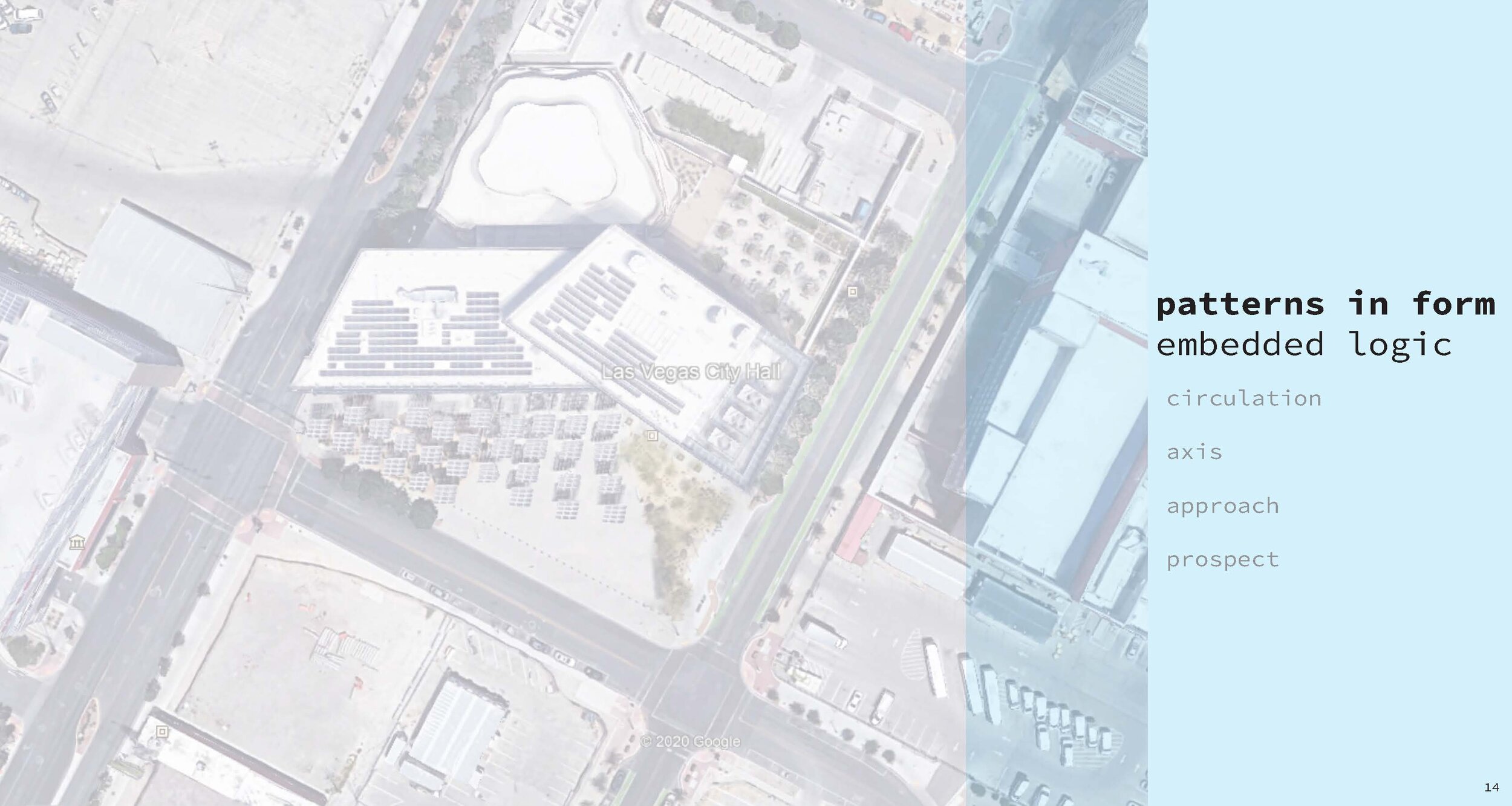
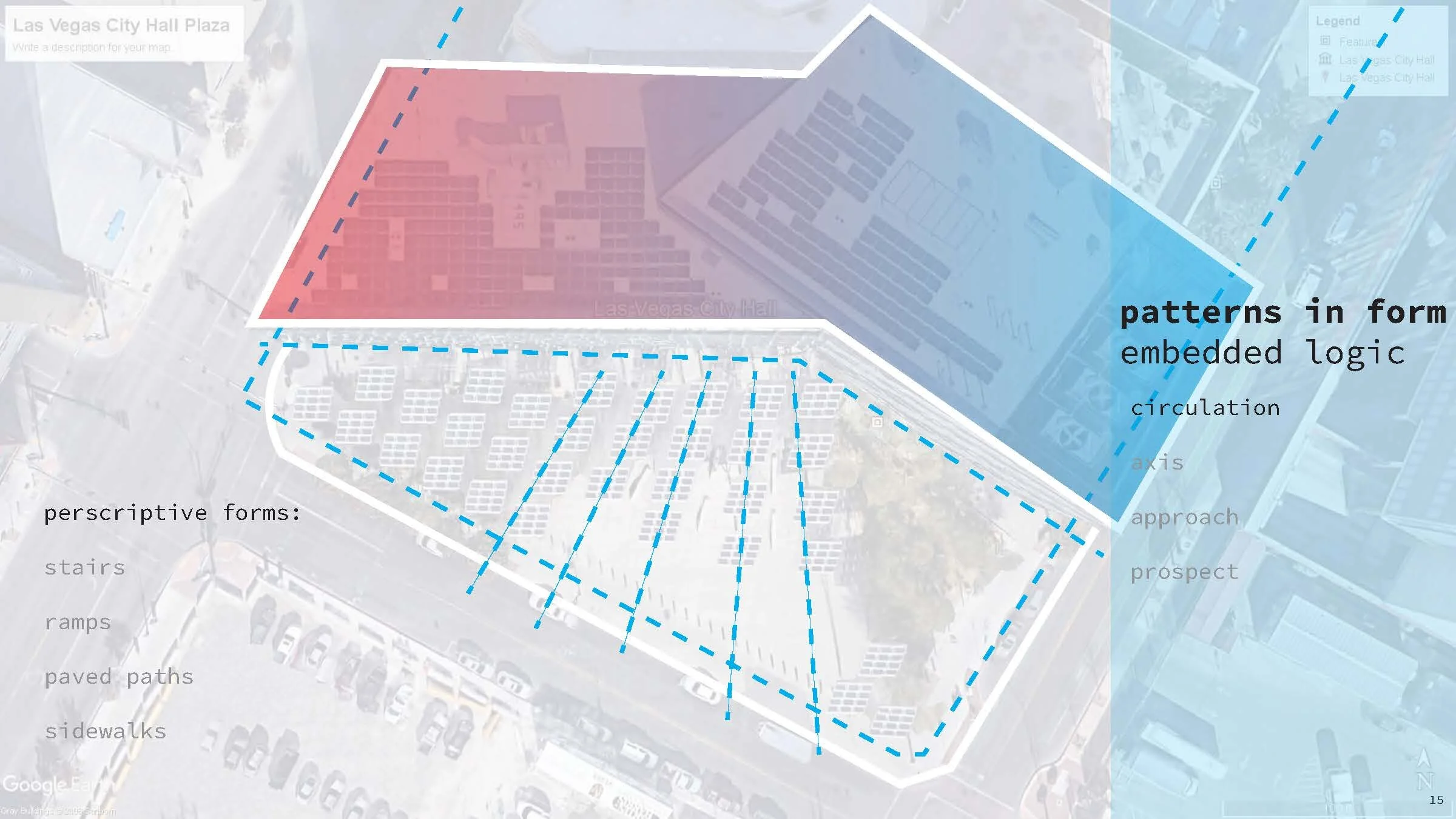
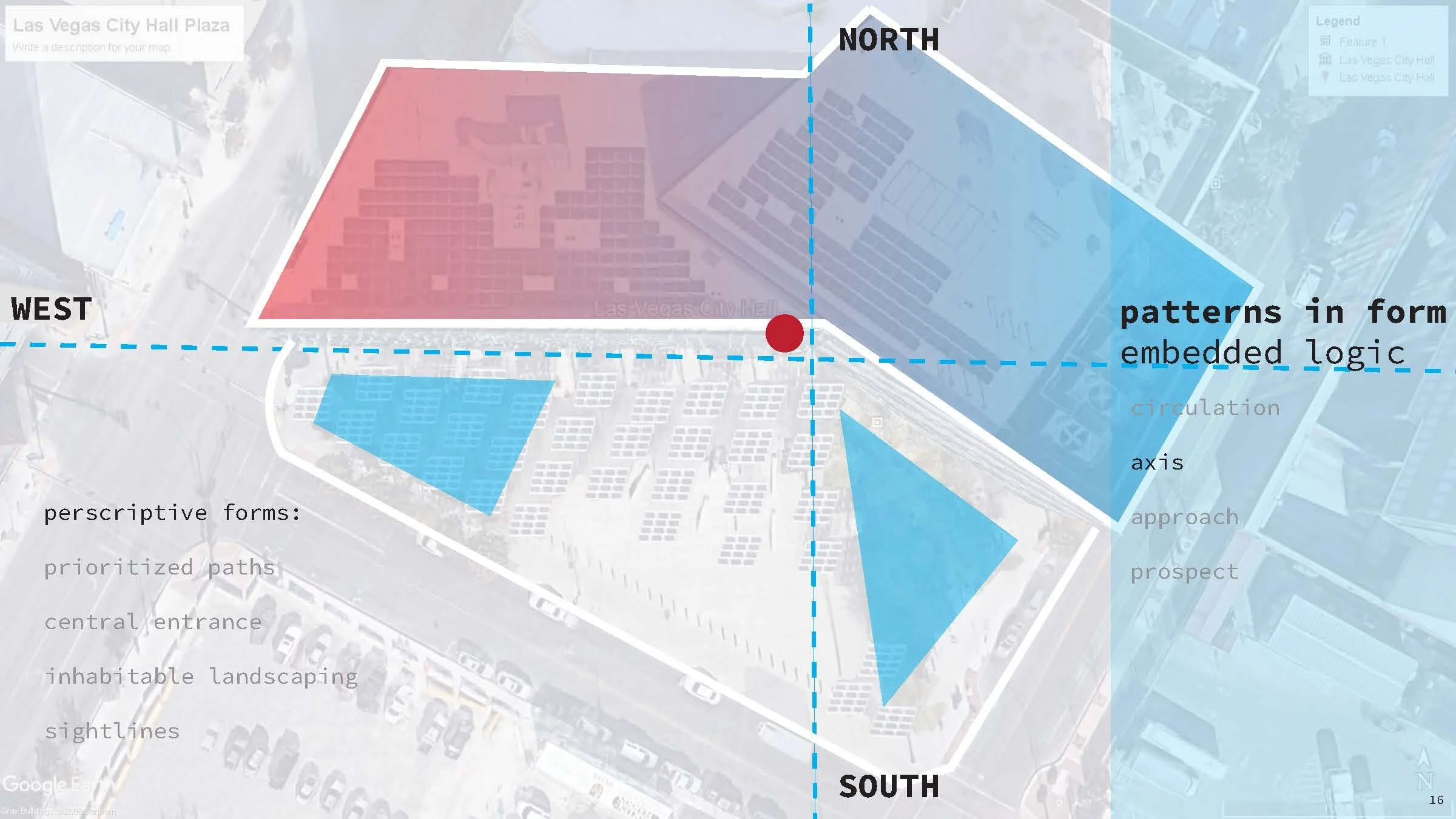
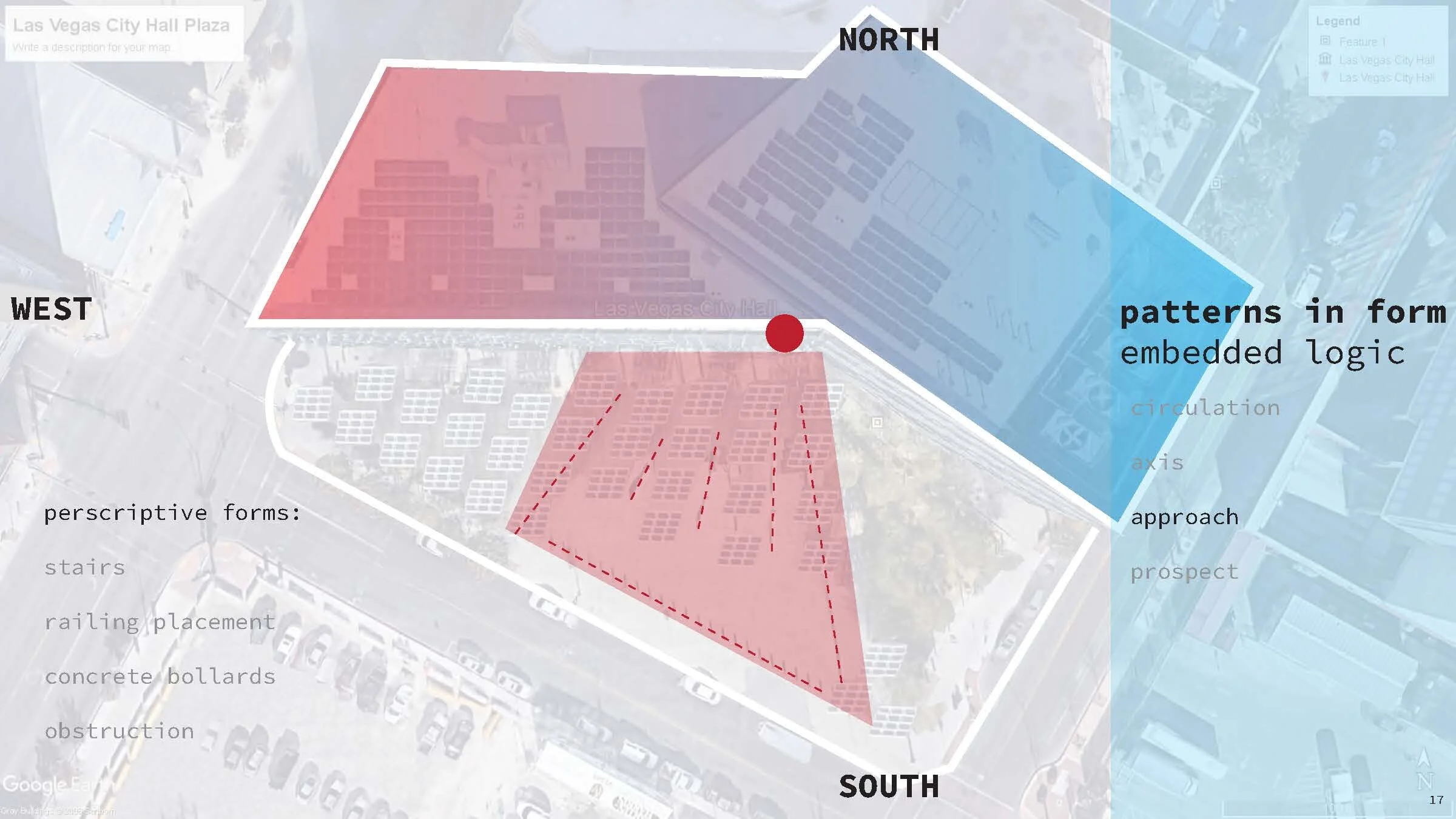
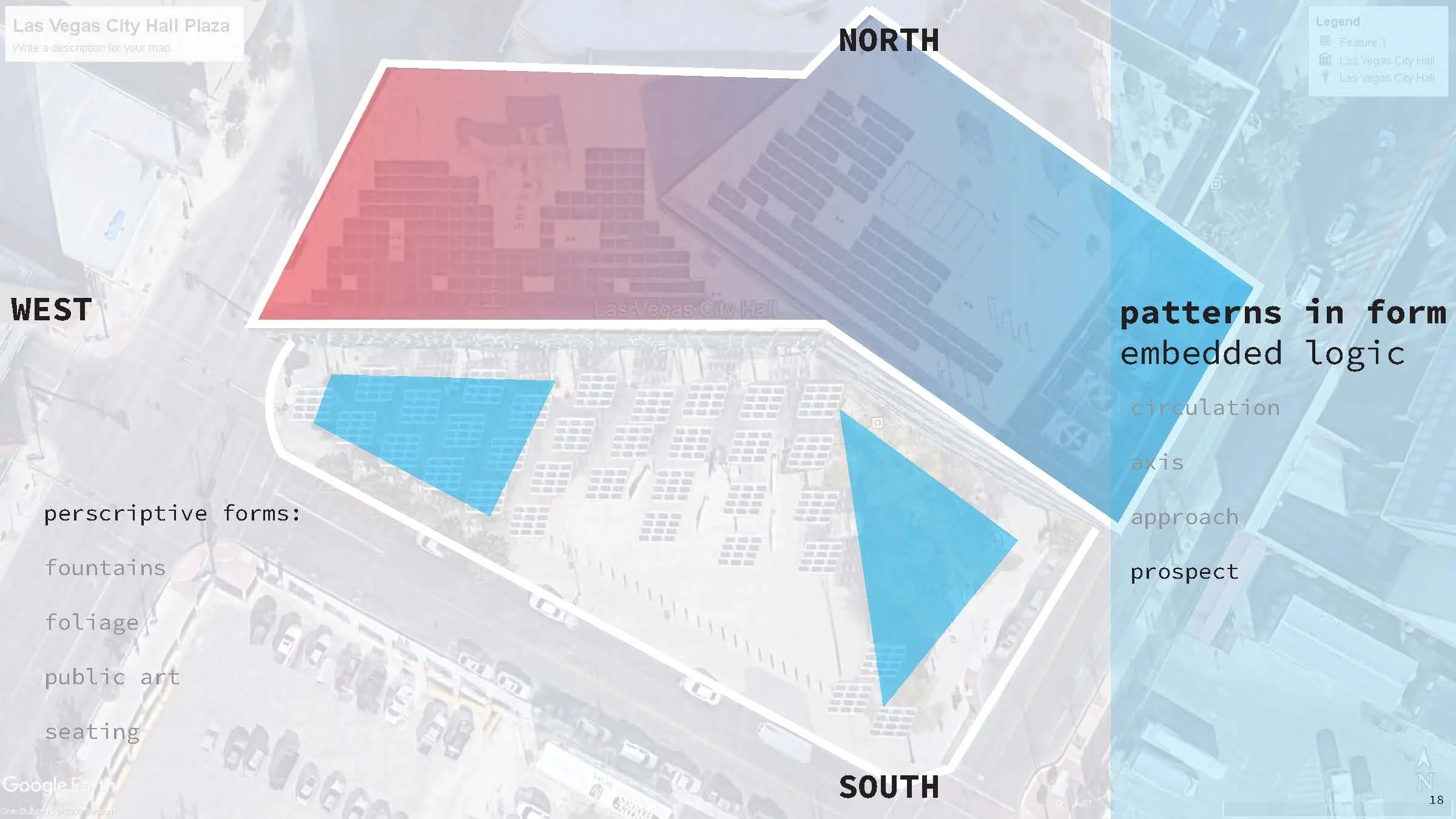
Designers rely on the formal logic of architectural objects, or what we will call in this project ‘embedded logic’. All recurring architectural objects have embedded logic, whether it be rooted in code, in history, or in aesthetics. Some examples of embedded logic in federal plazas - the subject of this project - are ramps, stairs, railings, paved paths, concrete bollards, benches and other seating, even Fountains and planters and trees. These objects prescribe a certain use or interaction from the user. Stairs command the user to ascend or descend, railings prescribe the direction of said ascension, paths instruct a designed circulation and fountains asked to be the subject of prospect.
This project asks whether these objects have become icons of their intended use more than functional. If this is the case, the distance between designers, space, and the occupants of said space could be upheld by these icons. This theory doesn’t call for eradication; many of these interventions are required by code and essential to safely navigate and congregate in an accessible public space. Rather, this project hypothesizes an alternative logic to embedded logic that is in service of and derived from the behavior of the user. A reactive logic. But how can we know what users want and how they move outside of prescription? Decoding such a logic, if it exists, requires the designer to exercise a practice that has been absent from standard architectural models for years: critical observation.
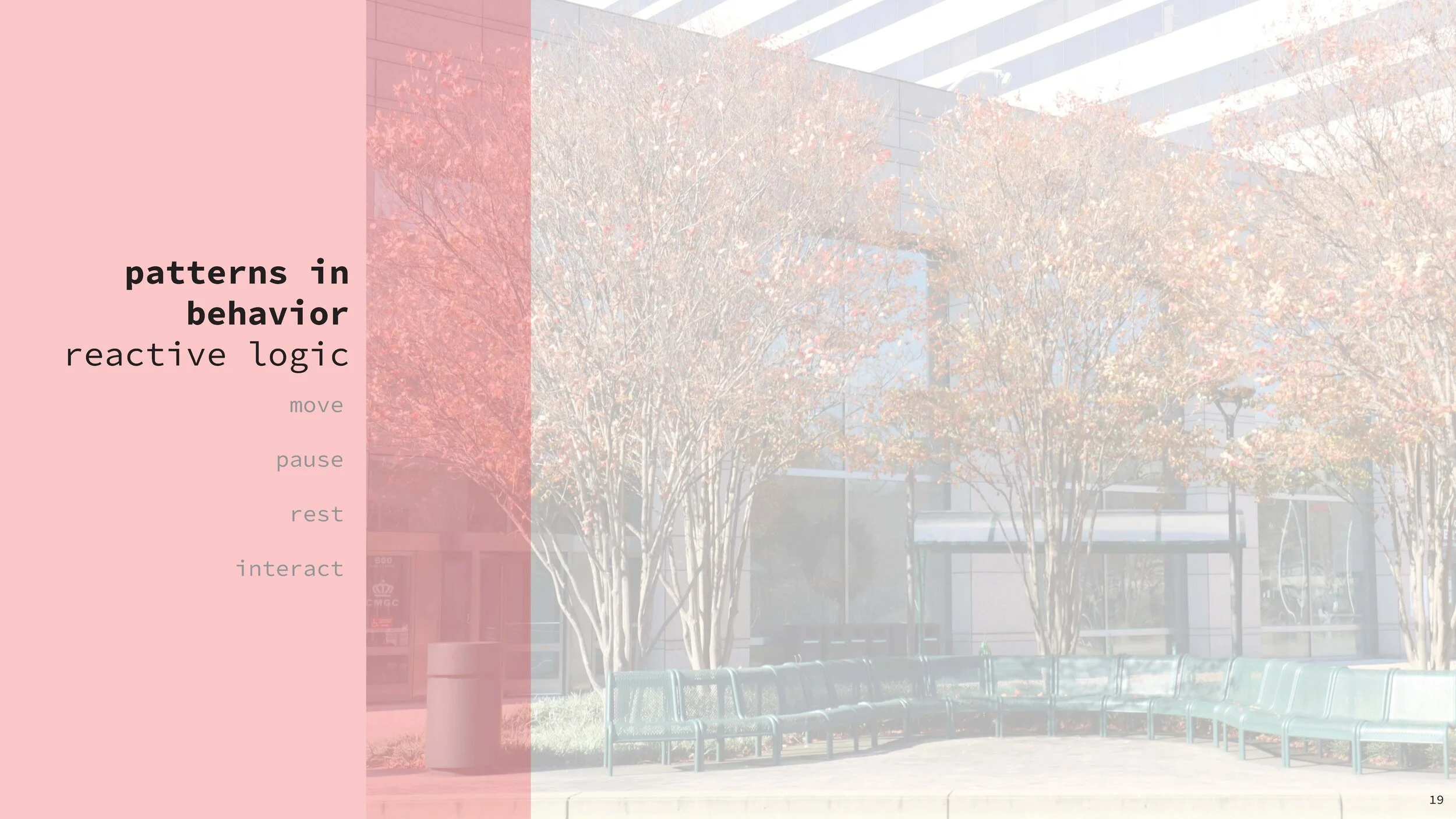
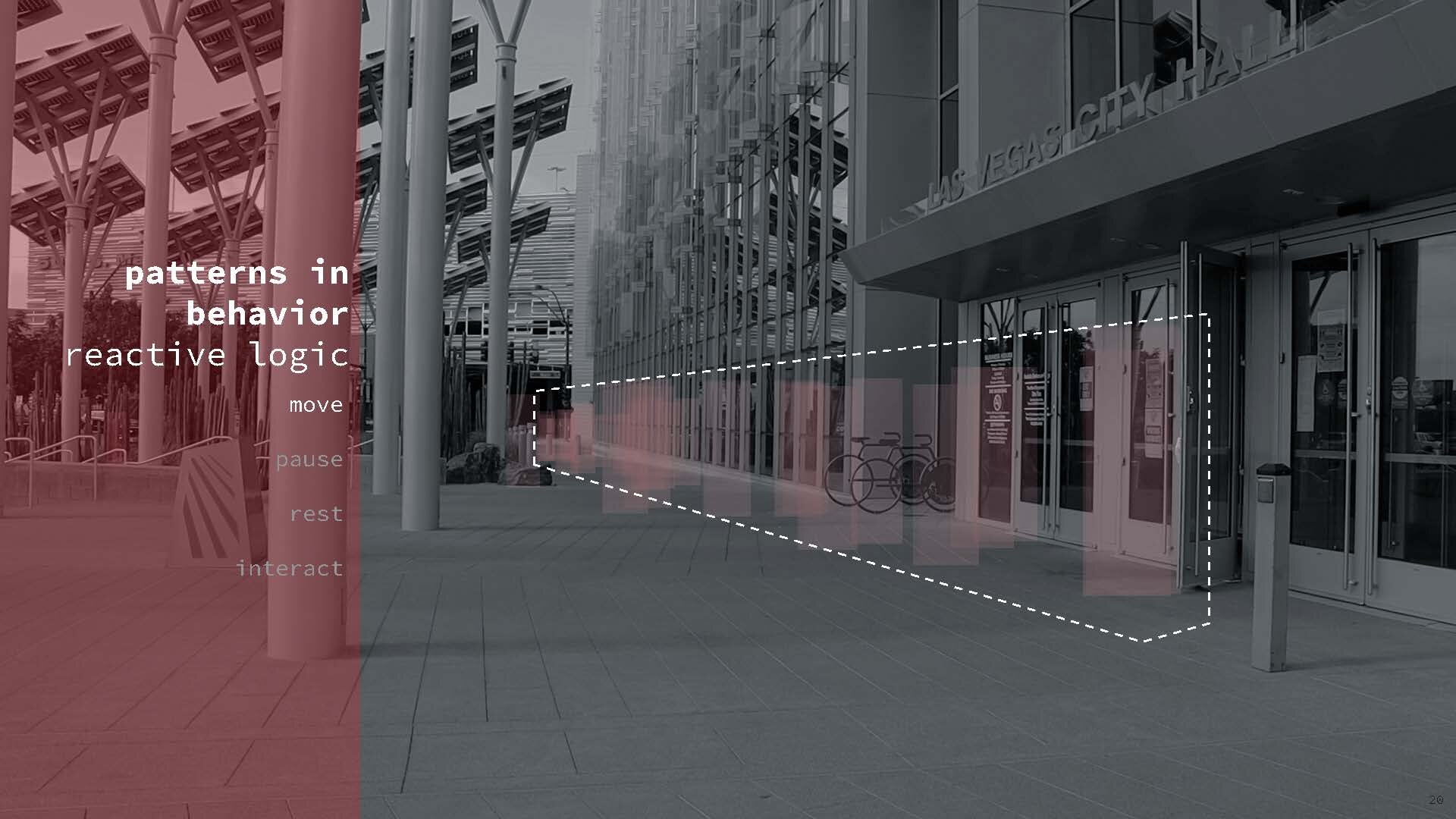
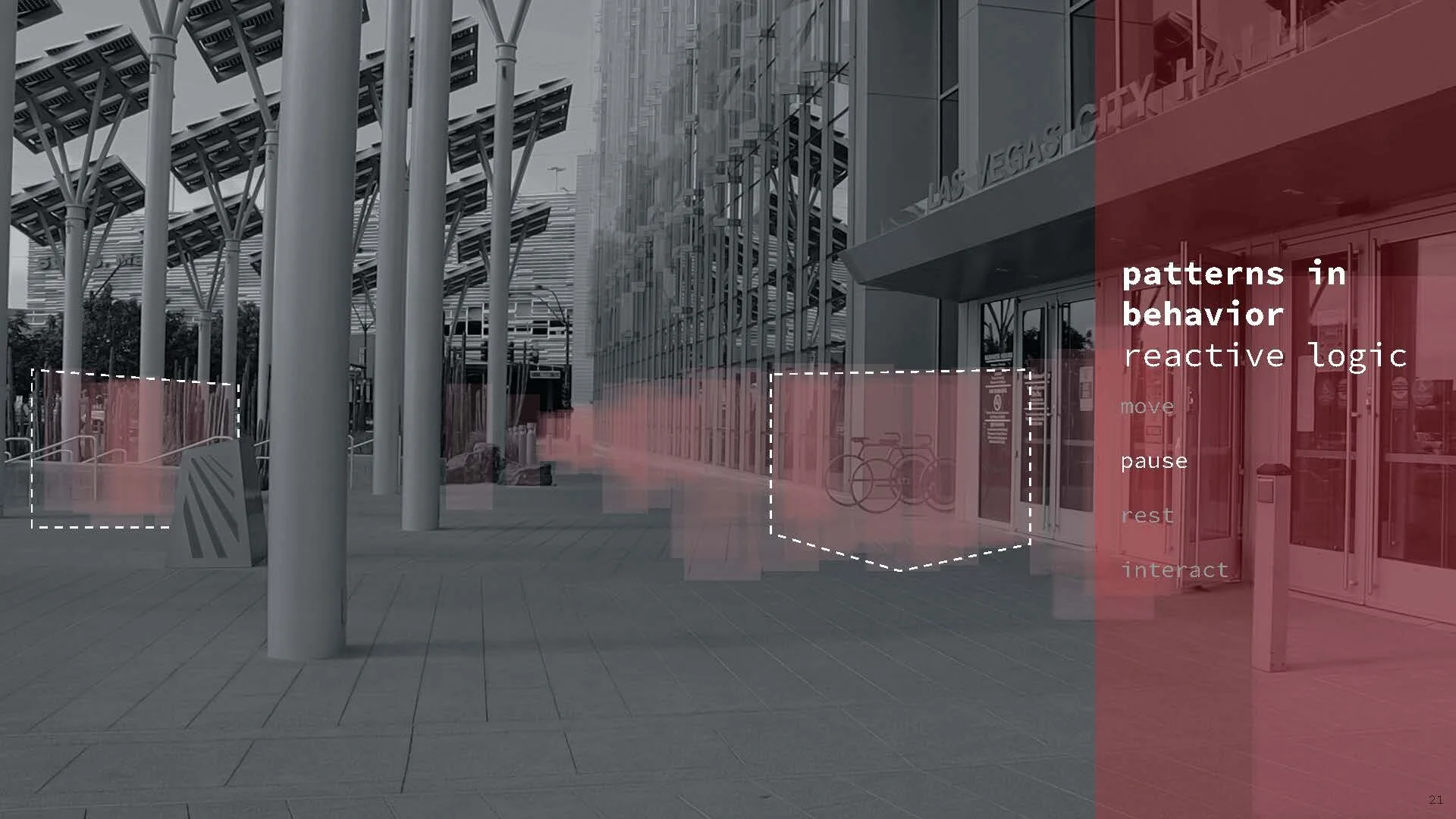
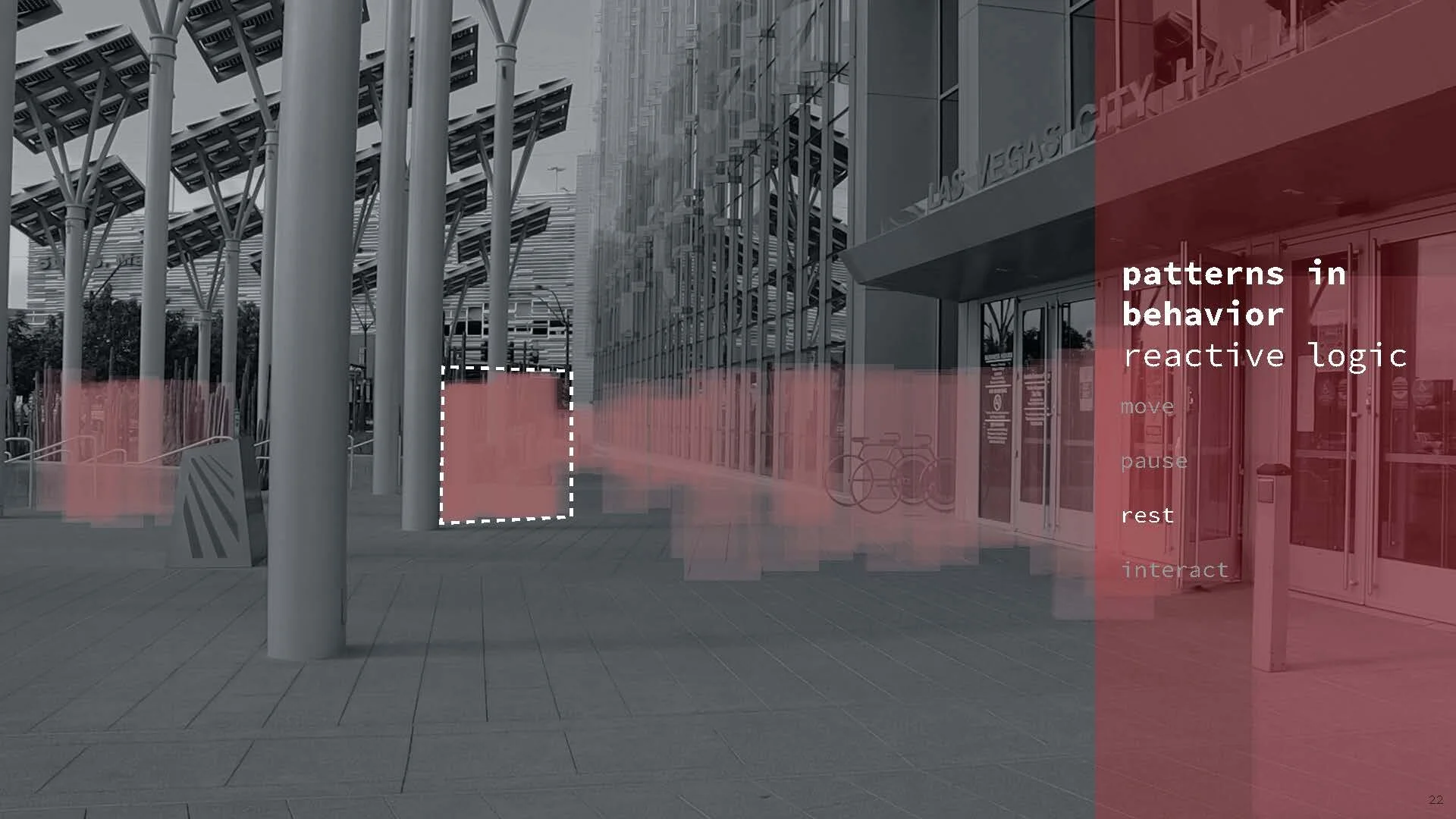
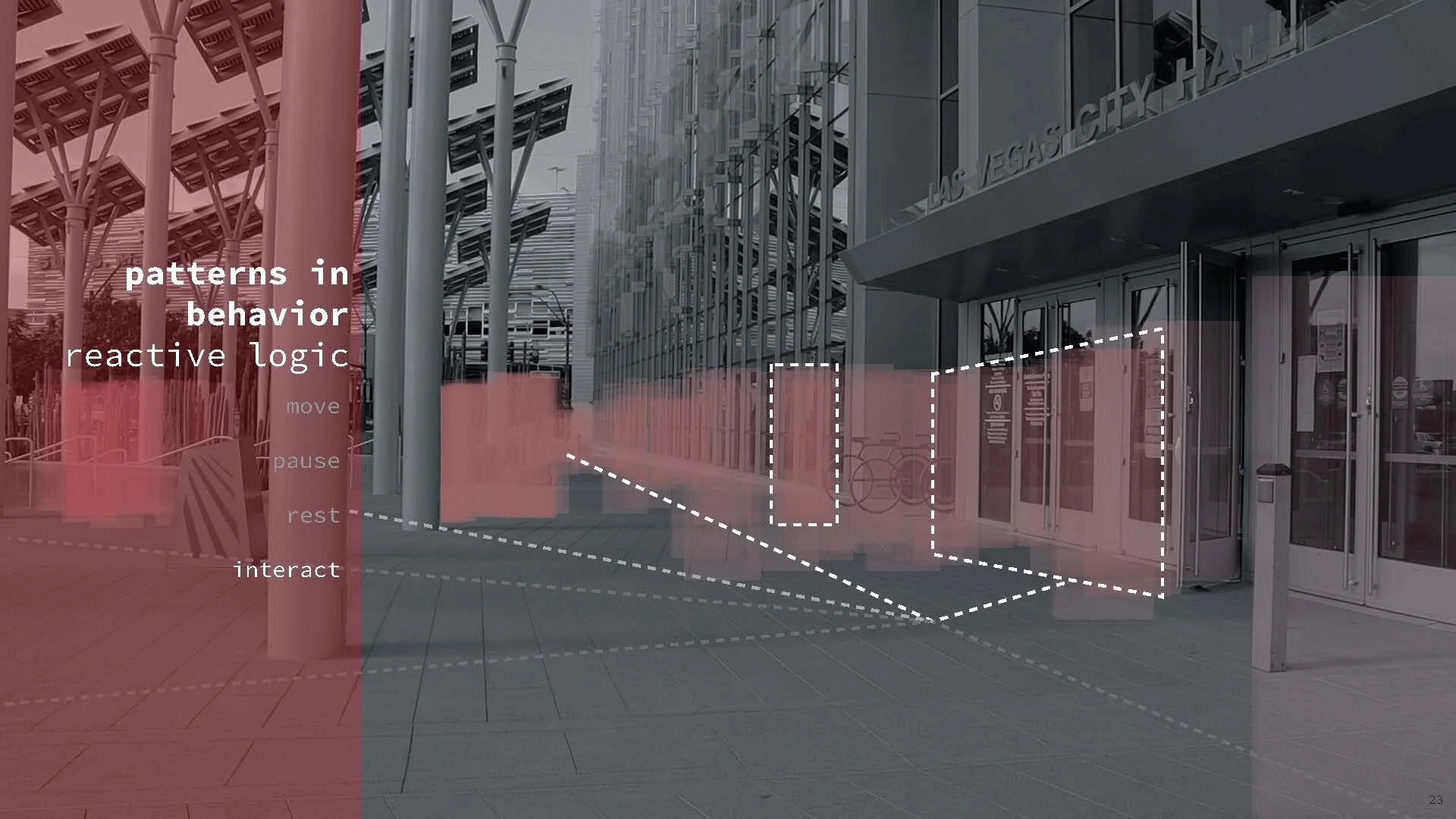
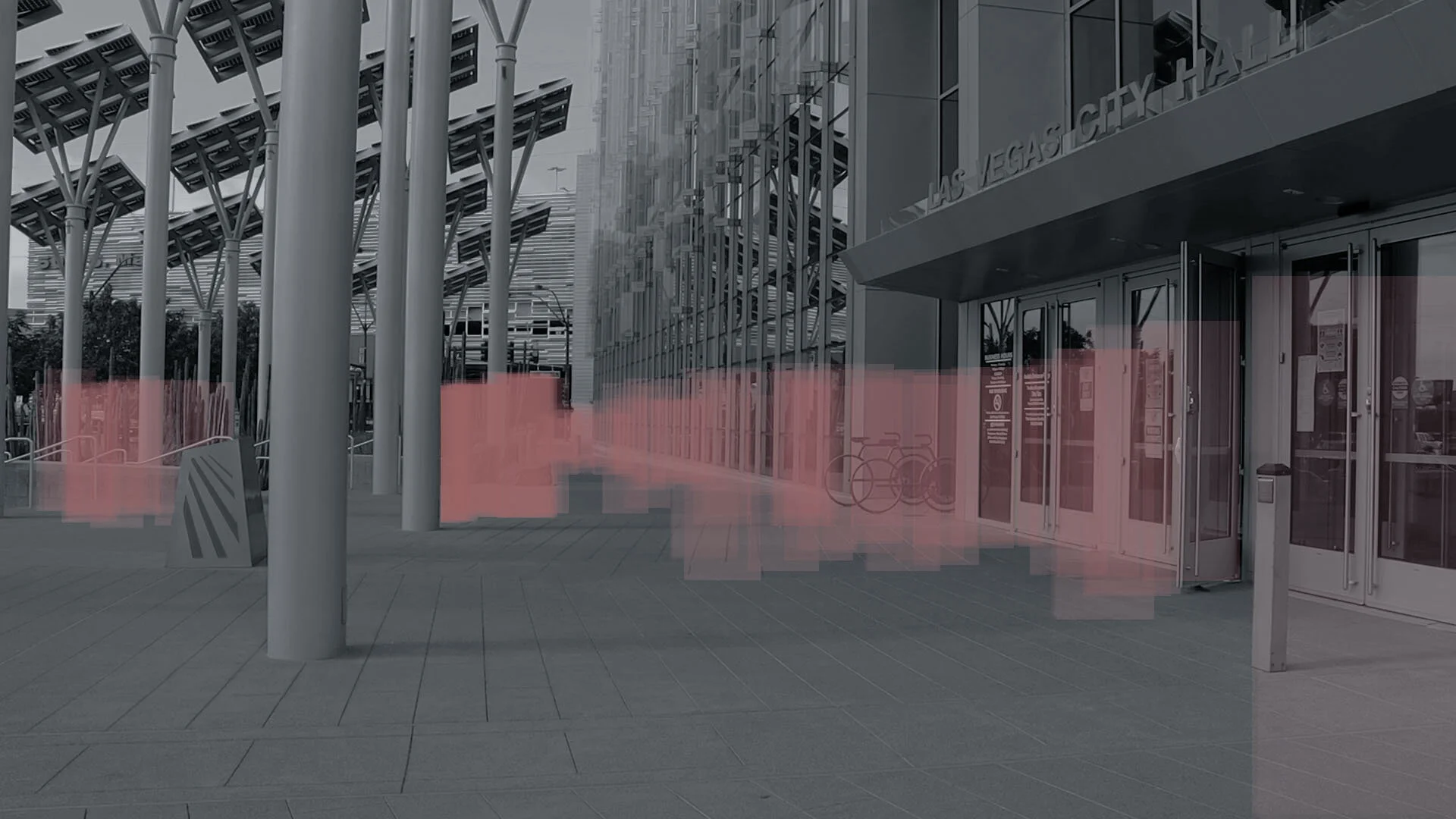
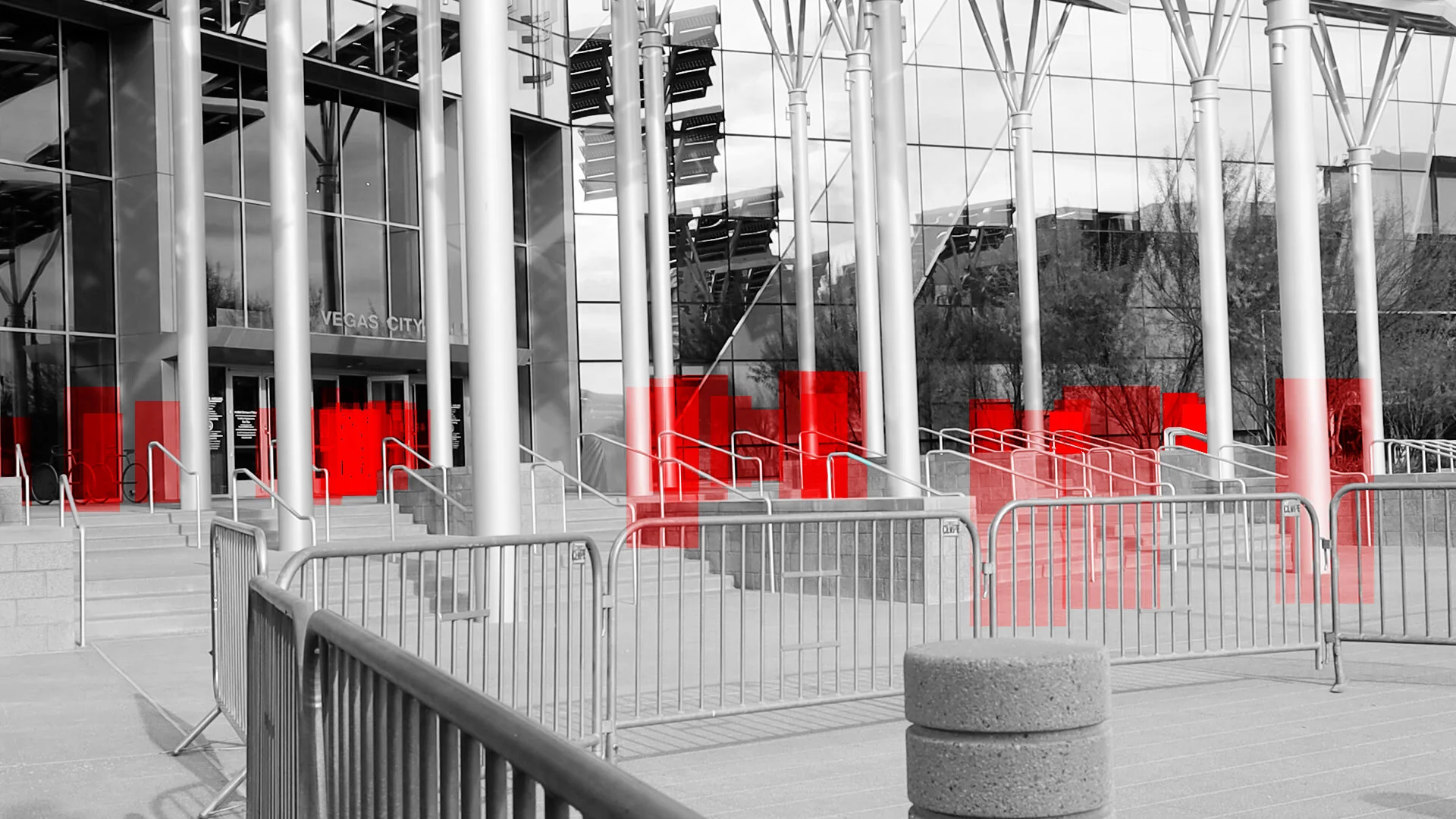
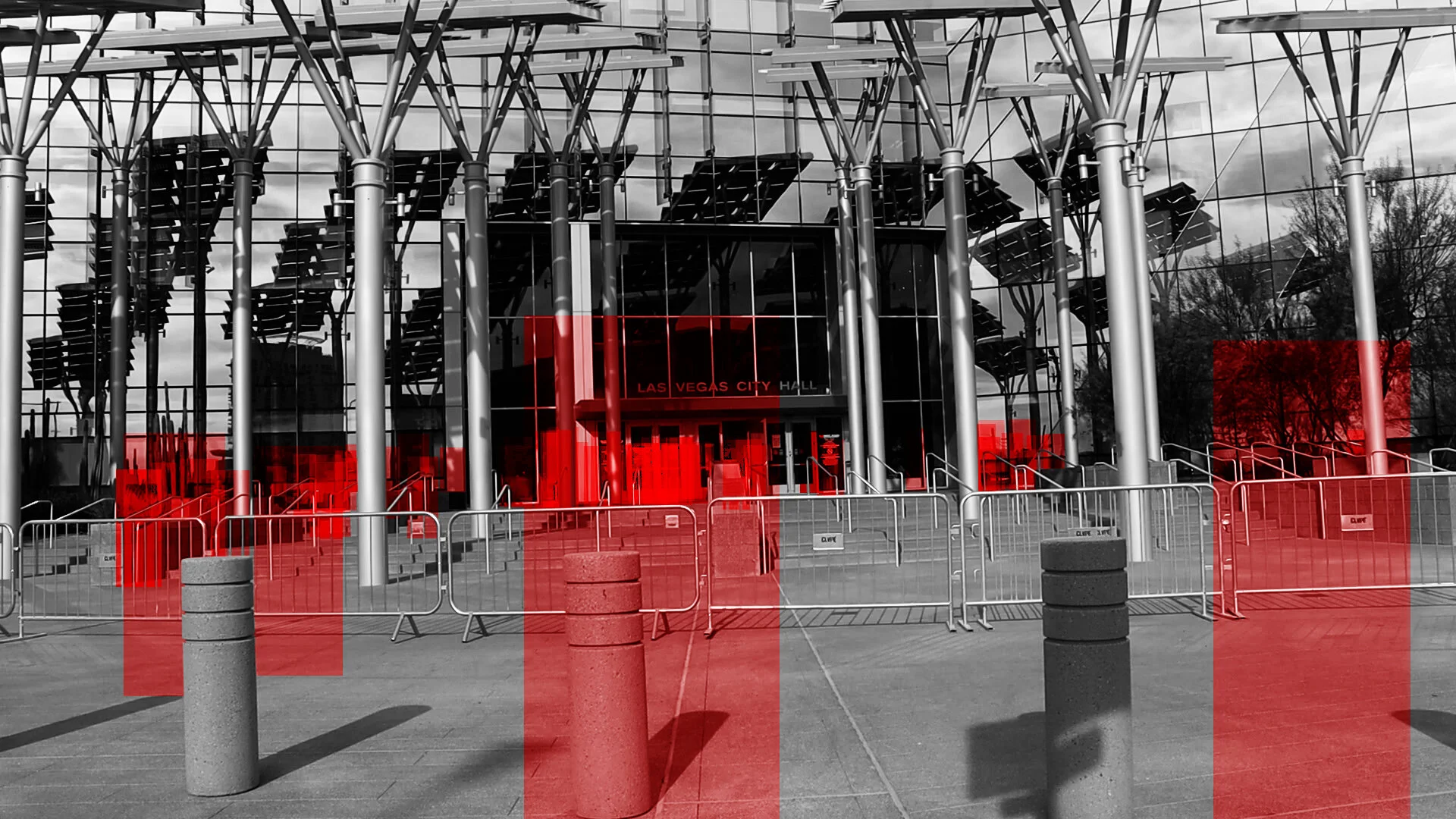
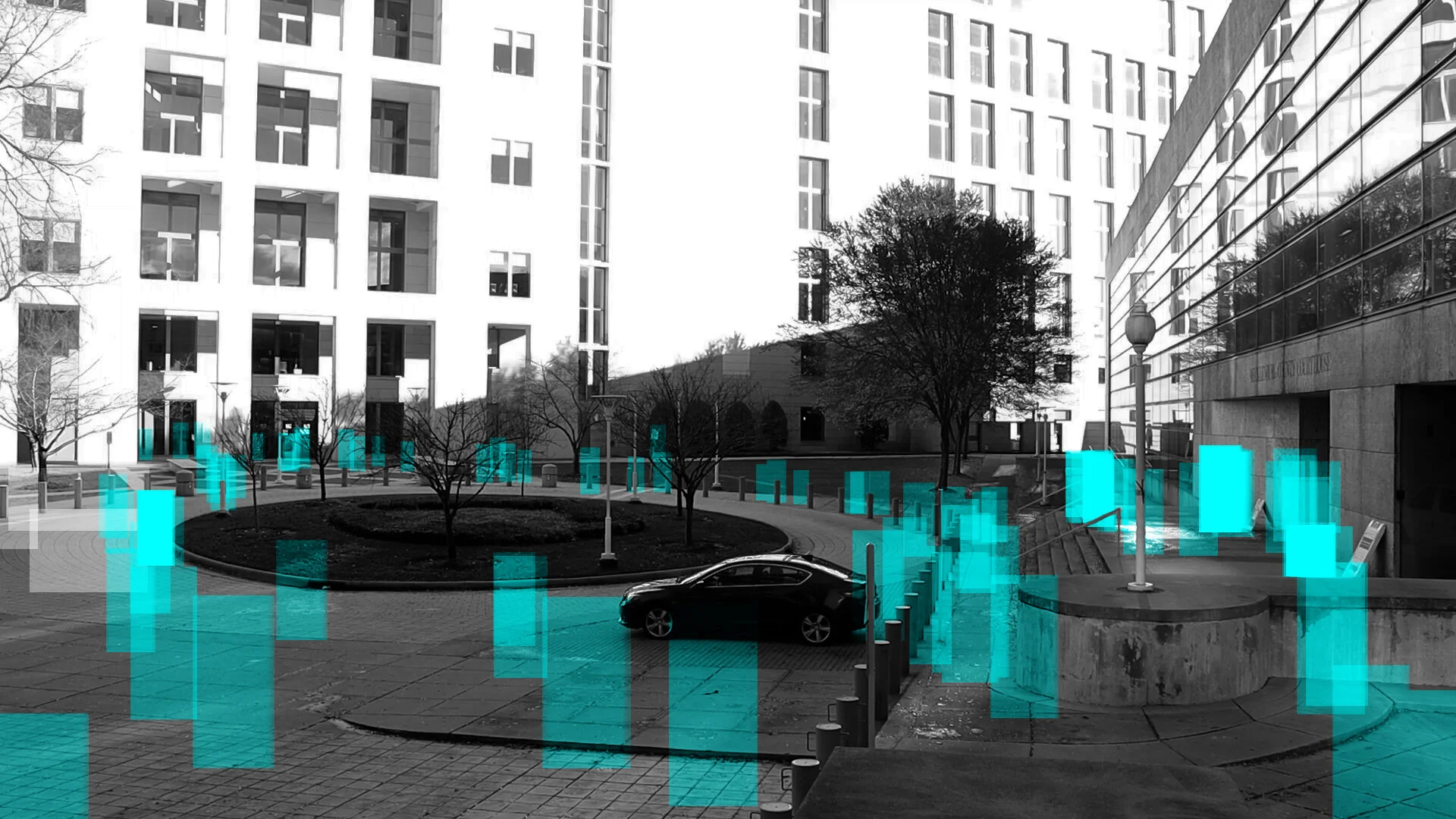
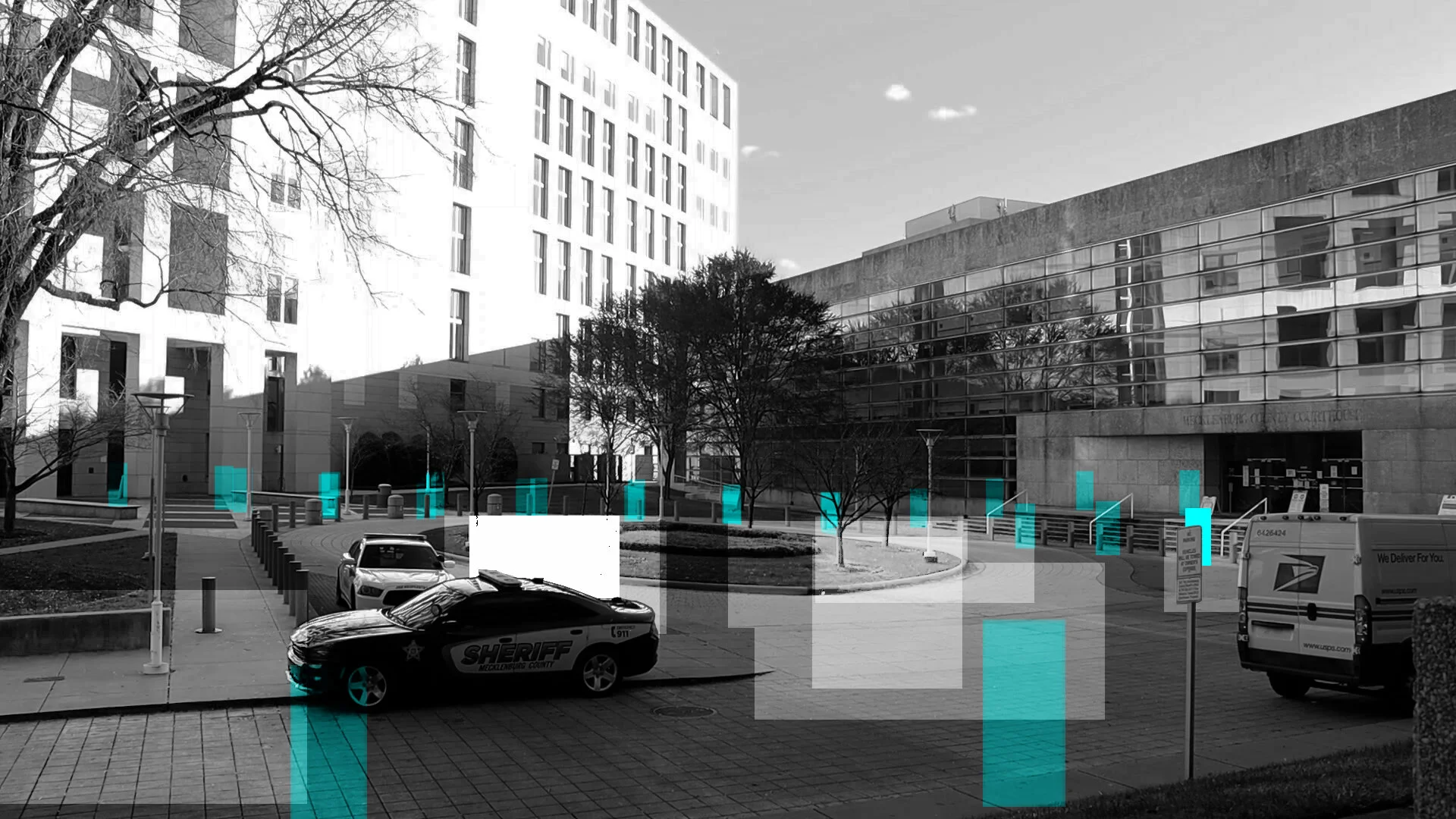
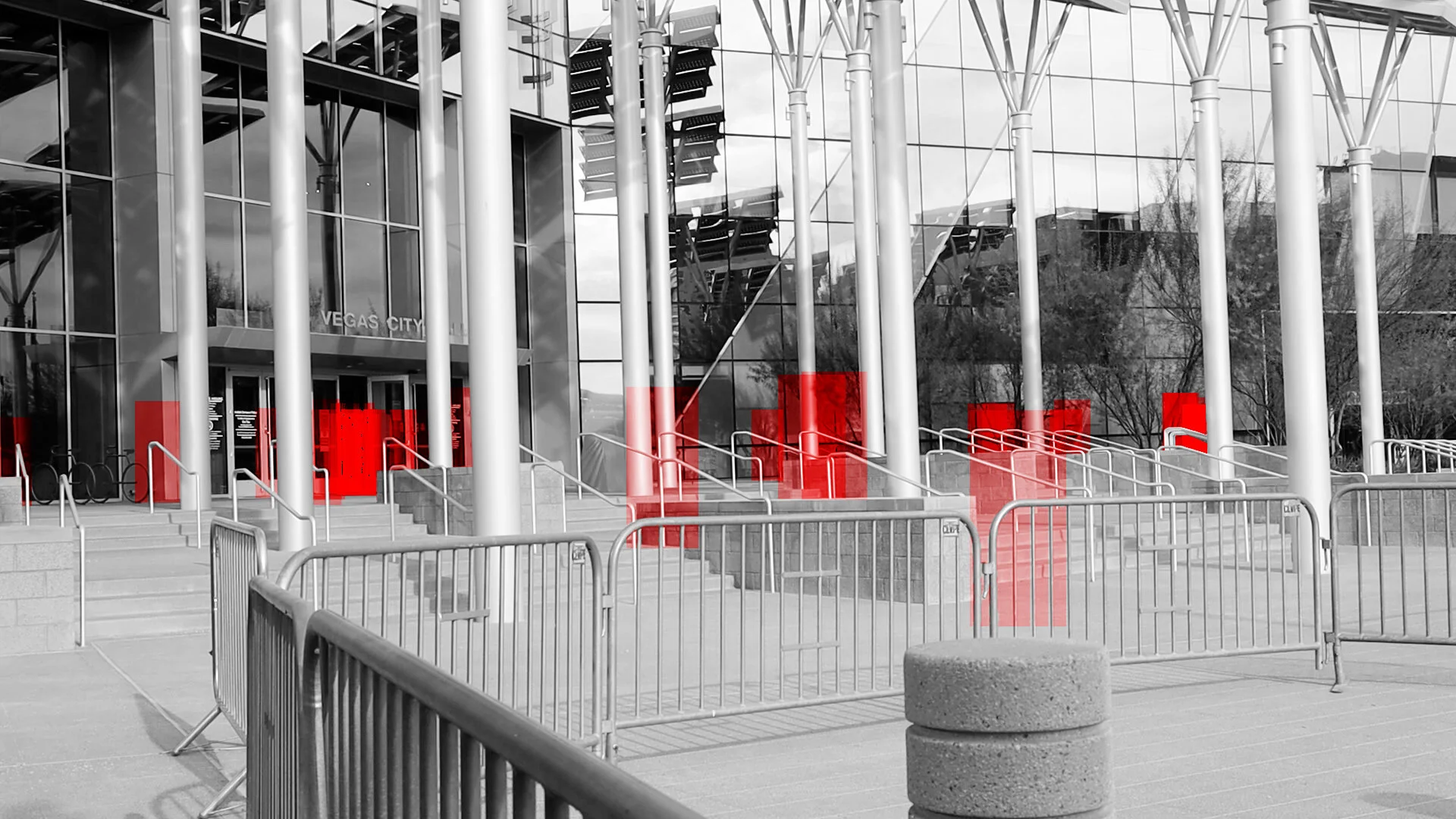
Time lapse on its own is a powerful tool, but it needs to be processed and analyzed in order to communicate information about patterns of behavior in a certain space. This is done here by accumulating the user data from each frame of the time lapse into one composite image. Since the personal background and details of each individual user are not important to this objective analysis, each user in a frame is replaced with a simple rectangle. Once each frame has been processed in this way, the frames are re-assembled and re-animated to create an analytical time lapse showing user behavior. These diagrams become the design basis for reactive logic-- a logic whose characteristics can be described in four words: move, rest, pause, interact.
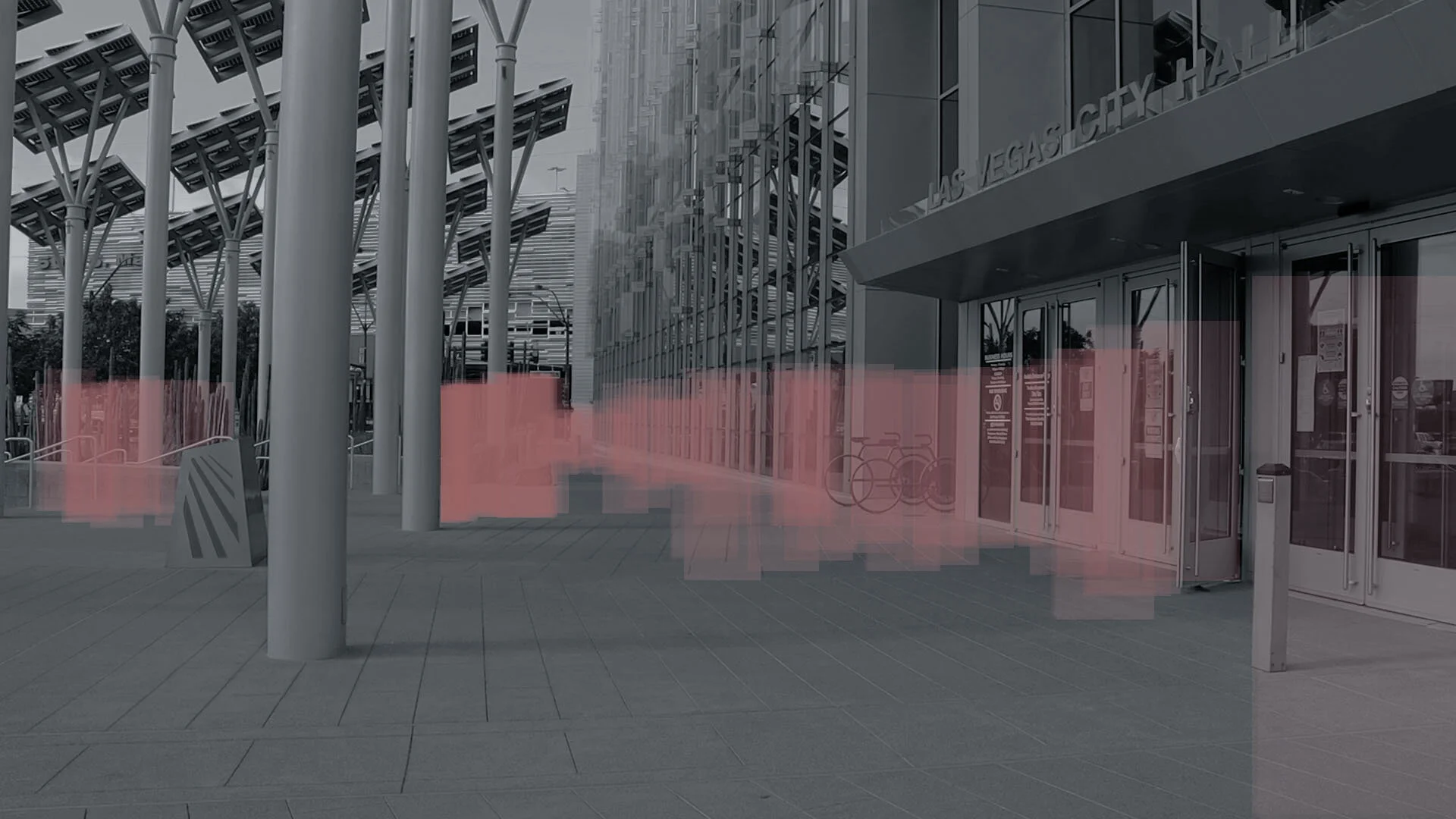
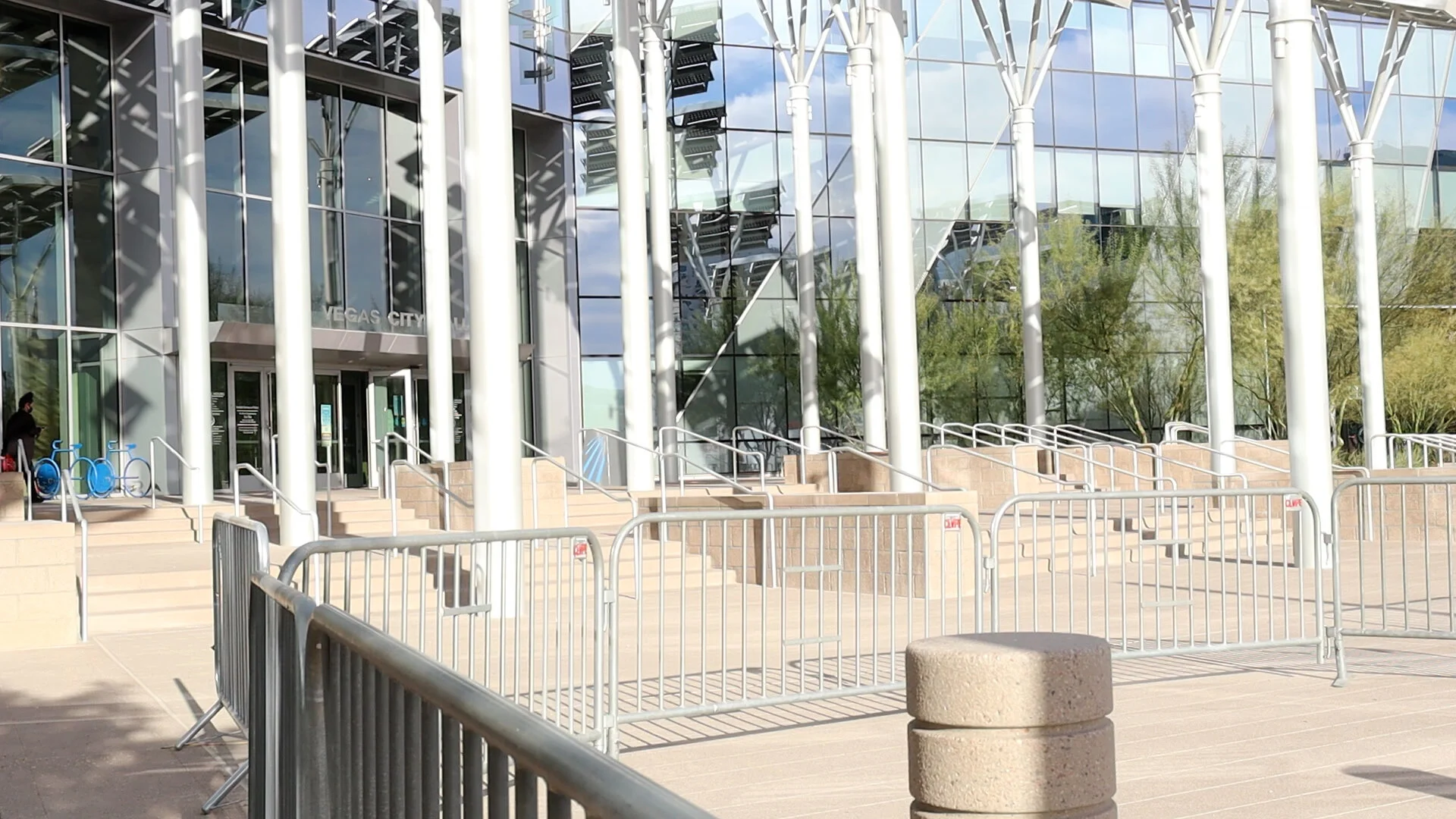
las vegas - vantage point 1 -
original and reanimated time-lapse
Vantage Point 1: West Entrance
Focus: West Entrance
Duration: 41 minutes
Time: 10 a.m. PT
Location: Las Vegas City Hall, NV
Rate: 1 frame per 11 seconds
Total frames: 223 frames
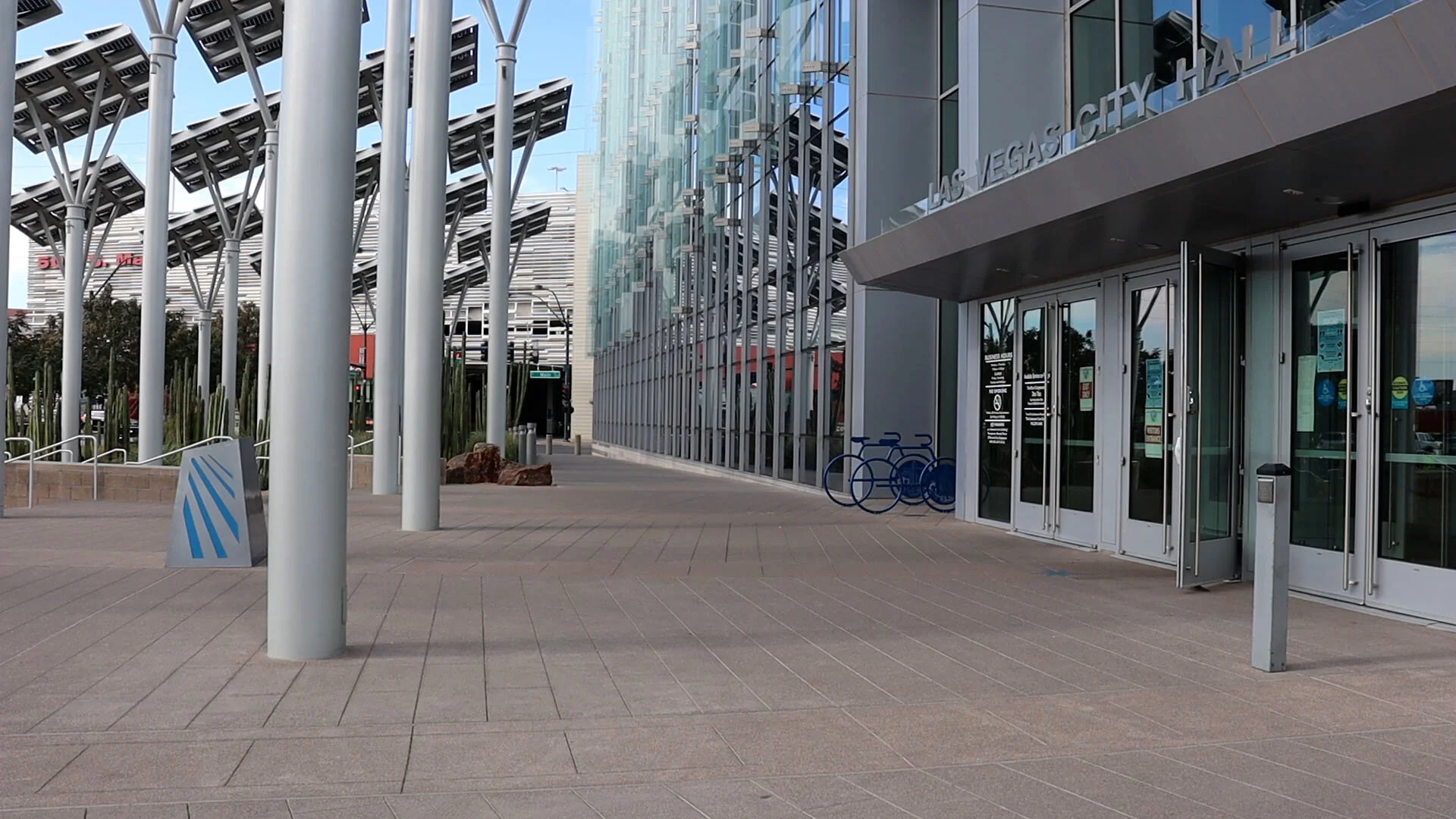
ABOVE: In this perspective of the western entrance, we can observe hotspots near the columns and at the top of the furthest west stair, where users tended to linger with any seating. It’s also clear when this data is compared with the other vantage points that the western entrance is the most heavily trafficked entrance to the plaza, likely because of its proximity to parking areas and distance from construction across the street on the south side. Note that even though the ramp is considered an accessible entrance, it is the most frequented by all users.

las vegas - vantage point 2 -
original and reanimated time-lapse
Vantage Point 1: West Entrance
Focus: West Entrance
Duration: 41 minutes
Time: 10 a.m. PT
Location: Las Vegas City Hall, NV
Rate: 1 frame per 11 seconds
Total frames: 223 frames